AI won't make money for you on its own. What it does is make the work people already pay for faster and cheaper, like designing a t-shirt, writing a product listing or building a simple app. That's good news if you want to earn extra money: work that used to need a team or a budget can now start with an idea, a few good tools and your own judgment.
Below are 7 realistic ways to start, with what each one takes, what AI does for you and what to keep in mind that the AI hype usually leaves out. We start with print on demand because it's where AI can do the most work for you, and you don't need money up front. Dreamship is also a print on demand company, so it's the one we know best.
A quick comparison of 7 ways to make money with AI
| Way to make money | What you need to start | What AI does for you |
|---|---|---|
| 1. Sell print on demand products | Designs, a free Dreamship account and a place to sell, like an Etsy shop or your own site. You pay for a product only after it sells. | Suggests ideas, creates designs, prepares print-ready files, makes product photos and writes listings |
| 2. Sell digital downloads | Your files and a place to sell, like an Etsy shop or your own site. Nothing to print or ship. | Drafts printables (files buyers print at home), planners, templates and art |
| 3. Freelance with AI as your assistant | A skill people already pay for and a place to find clients, like freelance sites or your network | Writes first drafts, does research, transcribes recordings and cleans up your work |
| 4. Set up AI automations for small businesses | Comfort with automation tools like Zapier, Make or n8n, and small businesses as clients | Writes the setup and helps fix it |
| 5. Create content | A channel like YouTube, TikTok, a newsletter or a podcast, a topic you know well and the patience to post regularly for months | Helps write scripts, edit videos and make captions and thumbnails |
| 6. Build small apps and tools | Some comfort with tech and a group of people with a specific problem to solve | Writes much of the code |
| 7. Teach what you know | Real experience in your topic and a way to teach it, like an online course, workshops or coaching | Outlines lessons, makes slides and worksheets and writes emails |
1. Sell print on demand products
With print on demand, you create the designs, and a print on demand company prints them on products like t-shirts, mugs and ornaments when a customer orders, then ships the order straight to your customer. You don't buy or store inventory, and you pay for a product only after someone orders it. You can sell on marketplaces like Etsy or in your own online store.
It's also a business where AI can help with almost every job:
- Ideas. Use ChatGPT prompts for Etsy and print on demand sellers to ask about the hobbies, milestones and inside jokes of a group you want to sell to, then check what already sells on Etsy (look for the "Bestseller" or "Popular now" badge).
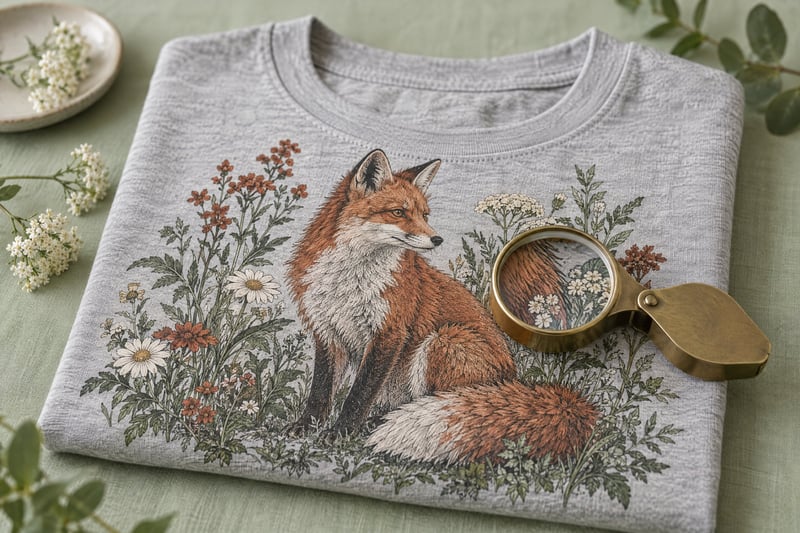
- Designs. Image generators turn a sentence into artwork. Check every letter, and keep brands, logos and famous characters out of your prompts so you stay within Etsy's rules and US copyright law.
- Sharp design files. AI images are often only 1,000 to 1,500 pixels wide, too small to print large without looking blurry. AI Upscale is built into the Dreamship Designer, so you can easily enlarge your art and keep the print sharp.
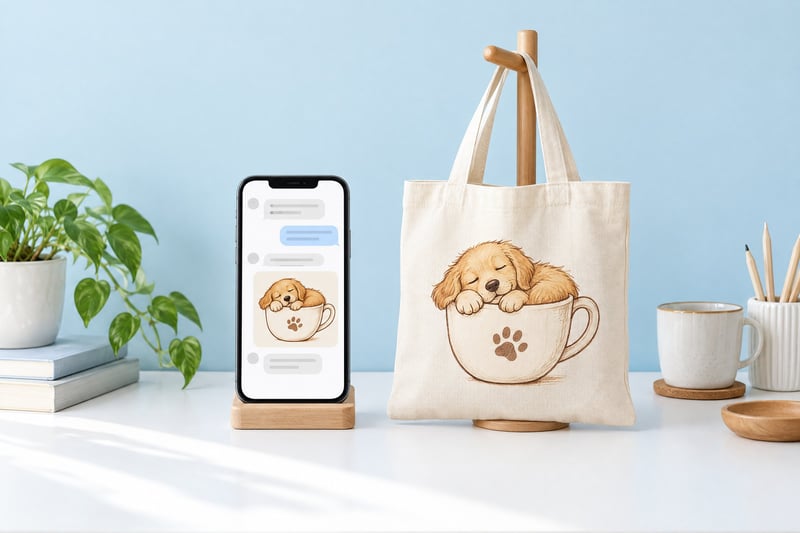
- Product photos. Dreamship makes mockups of every product from your design, and the free AI Mockup Generator puts your product in lifestyle scenes for your listings and ads.
- Personalized gifts. With AI Personalization for Etsy, buyers answer up to 5 questions, like their dog's name and a photo, and AI makes a one-of-a-kind design for each order. By default, each order waits for your review (Needs Review status), so you can see the art before it prints.
- Listings. AI writes first drafts of titles, descriptions and tags. Give it the real product details, and on Etsy, say in the description when AI helped make the design.
- Running your shop from a chat. The Dreamship connector links your account to ChatGPT, Claude, Gemini, Grok or Perplexity. Then you can ask your assistant to turn your designs into products, publish them to your shop, look up costs and check on orders. To keep you in control of costs, your assistant only creates draft orders. Submitting, canceling and paying for orders stays with you on Dreamship.
You can see how to use AI at each step, from finding ideas to running your shop, in our step-by-step guide to AI for print on demand.
How to price your shirts for a profit on Etsy
Start with what buyers already pay for shirts like yours. When we checked about 40 top-ranked t-shirt listings across 11 common Etsy searches in November 2026, a size medium usually cost $21 to $25. Every one of them charged for shipping, usually $5.99, so buyers typically paid $26 to $31 for one shirt.
Listings Dreamship publishes to Etsy offer free shipping by default, so your price has to cover shipping too. Priced at $24.99 with free shipping, a Unisex Standard T-Shirt still costs buyers less than most of those shirts, and here's what one sale leaves you. On Dreamship's free Basic plan, the shirt starts at $6.99, and US Economy shipping to a US customer starts at $5.19. Etsy's fees come from Etsy's fee page.
| One sale on Etsy | Amount |
|---|---|
| Your price, with free shipping | $24.99 |
| The shirt, paid to Dreamship | $6.99 |
| US Economy shipping, paid to Dreamship | $5.19 |
| Etsy transaction fee (6.5%) | $1.62 |
| Etsy payment processing (3% + $0.25) | $1.00 |
| Etsy listing fee (charged again when it sells) | $0.20 |
| What you keep | about $9.99 |
That's about 40% of the sale. Etsy also charges payment processing on the sales tax a buyer pays, which takes a few cents more. When you create a product, Dreamship fills in a starting price that covers your costs. On Etsy you can usually charge more, so compare it with similar listings before you publish.
A few more pricing tips:
- Compare what buyers actually pay. Open 10 to 20 listings like yours and add the price of a medium to the shipping. Search results often show the price of one cheap option, like a youth size, and many listings show a "sale" off a higher original price.
- Price premium shirts higher. The Unisex Comfort Colors® 1717 Heavyweight T-Shirt starts at $12.79 on the Basic plan. At $29.99 with free shipping, you'd keep about $8.71 a sale.
- Charge more for bigger sizes. 2XL and up cost more to make, so raise their prices to match.
- Price so you still profit after ad fees or discounts. If a sale comes through Etsy's Offsite Ads (ads Etsy runs for your listings on Google, Facebook and other sites), Etsy charges an extra 15% of the order (12% once you've made $10,000 on Etsy in the past year), which is $3.75 on a $24.99 shirt. Coupons and sales also lower what you keep from each order.
How many sales you make depends on your designs, your niche and your marketing, so no one can honestly promise you a number.
Keep in mind: AI helps you make the products, while finding the right buyers, getting found in search and marketing your shop still take your time.
2. Sell digital downloads
Digital downloads are files buyers print or use themselves, like planners, wall art, coloring pages, worksheets and templates. AI can draft the artwork and the content, and you turn it into something polished and useful. There's nothing to print or ship, and on Etsy each listing costs $0.20.
Keep in mind: it's a busy market and ideas get copied easily, so quality and a clear style will help you stand out more than listing lots of files. On Etsy, you also need to mention AI in the description when AI helped make an item. One tip: a design that sells as a download can often go on a mug or a t-shirt too, so the same art can earn in two ways.
3. Freelance with AI as your assistant
If you already have a skill people pay for, like writing, editing, translation, graphic design, video editing or social media management, AI can speed up the parts that take the longest: first drafts, research, transcripts and cleanup. That frees you to take on more clients or spend more time on the work that needs you.
Keep in mind: your clients can use AI for first drafts too, so the value you bring is your judgment, your taste and your knowledge of their business. A specialty helps you stand out, like writing Etsy listings for candle shops instead of writing for anyone who asks.
4. Set up AI automations for small businesses
Small businesses often want the time AI can save without having to learn the tools themselves. You can set up a chatbot that answers common customer questions, sort incoming email, keep orders and spreadsheets in sync or build weekly reports, with automation tools like Zapier, Make or n8n. AI writes much of the setup and helps you fix it when something breaks.
Keep in mind: once a business uses your setup, they'll need your help whenever something goes wrong. Start with one setup you can repeat for one kind of business, like booking reminders for hair salons, and charge for looking after it, not just for building it.
5. Create content with AI help
YouTube channels, TikTok accounts, newsletters and podcasts can earn from ads, sponsors and affiliate links (links that earn you a commission when someone buys). AI helps with scripts, editing, captions, thumbnails and research, so one person can publish what used to take a small team.
Keep in mind: it takes time to grow your followers, and platforms favor content with a personal touch over mass-produced videos. YouTube, for example, doesn't pay channels for mass-produced or repetitive content. The way you see and talk about your topic is what brings people back.
6. Build small apps and tools
AI coding assistants like Claude Code, Codex and Cursor can write much of the code for a simple web app, a browser extension, a Shopify app or a spreadsheet tool. If you know a group of people with a specific problem, you can build a small tool that solves it and charge a one-time price or a subscription.
Keep in mind: building is the easy part now. You still need to understand what you ship, keep your users' data safe, answer support questions and find customers, and finding customers is usually the hardest part.
7. Teach what you know
If you're good at something, like baking, bookkeeping, knitting or selling on Etsy, people will pay to learn it through courses, workshops, coaching or templates. AI helps you outline lessons, make slides and worksheets and write the emails that sell them.
Keep in mind: people learn from teachers they trust, so you need real experience to share. Think twice before picking the most crowded topic of all, teaching people how to make money with AI. It's also where most of the hype is.
How to pick the right one for your skills
Pick one and give it a real try before you add another. Here's a quick way to choose:
- You want to build something of your own without money up front: start with print on demand or digital downloads.
- You have a skill people already pay for: freelancing with AI usually gets you paid soonest.
- You like solving technical problems: try automations for small businesses or a small app.
- You love making videos or writing: try content or teaching, and be patient while your following grows.
Mistakes to avoid when you start making money with AI
- Believing easy-money promises. If a course or service selling a done-for-you "AI store" promises income with almost no work, walk away. The FTC has taken action against companies that sold AI-powered online stores with that kind of pitch.
- Copying brands and characters. AI makes it easy to put a famous character on a mug, and just as easy to lose your listings or your shop over it.
- Using AI's work without checking it. AI can misspell words, invent details and get facts wrong, so check everything AI makes, from designs and listings to articles, code or client documents, before you publish or send it.
- Selling on Etsy without saying AI helped. Etsy asks you to say in the listing description when AI helped make an item, for example: "This design was created with the help of AI tools."
- Chasing too many ideas at once. One side project you stick with beats seven you started.
Questions people ask
Can you really make money with AI?
Yes, but AI is the tool, not the business. People make money with AI by selling something others want, like a product, a service or what they know, and using AI to make it faster or cheaper. Expect to put in real work, especially at the start.
What's the lowest-cost way to start making money with AI?
Print on demand and digital downloads need little or no money up front. With Dreamship, the Basic plan is free and you pay for a product only after a customer orders it. Etsy charges $0.20 to list each item.
Is it legal to sell AI-generated designs?
In the US, generally yes, with a few rules: keep trademarks, characters and celebrities out of your designs, follow each marketplace's rules on AI, and know that art made from a prompt alone isn't protected by US copyright.
Do I need to be good at design to sell print on demand products?
No. AI can draw for you, and Dreamship's tools take care of print files and product photos. What matters most is your eye: picking ideas buyers want and checking that every design looks right before it goes on sale.
Ready to try print on demand? Create a free Dreamship account and turn your first design into a product. Our AI tools take the repetitive work off your plate, so you can focus on growing your shop.